
Investing in Bali: everything you need to know as an international investor
Current figures, regulation, regional overviews and what Bali Estate Group does for you as a developer and seller, based on public market data and our hands-on experience on the island.
Foreign arrivals in Bali 2025
+9.7% vs 2024
Return after costs on BEG projects
Occupancy in prime locations
Leasehold, unique in the market
Market context
Why Bali is a serious investment destination in 2026
Three forces make Bali more attractive right now than five years ago: sustained tourism growth, diversification of source markets and an economic climate that has become more predictable for investors.
Tourism figures keep growing
In 2025, Bali received roughly 6.95 million direct foreign arrivals, a growth of 9.72 percent compared to 2024. The first five months of 2025 even showed a growth of 13.65 percent. For 2026, the Indonesian statistics agency expects the 7 million mark to be broken.
Australia remains the largest source market, followed by India, China, South Korea and various European countries. For you as a landlord, this means high occupancy of luxury accommodation in prime locations, which in practice comes out at 70 to 90 percent occupancy per year.
More important still: demand grows faster than supply. While the number of tourists rose from 2.8 million in 2011 to nearly 7 million in 2025, and toward 10 million in 2030, the number of hotel rooms grew much more slowly, from around 35,000 to roughly 62,500. Demand therefore grows about twice as fast as supply, which structurally supports occupancy and room rates in prime locations.
That appeal is also externally recognised: on Tripadvisor, Bali was voted the number 1 destination in the world by travellers, number 1 in Asia and number 1 honeymoon destination. An illustration of the sustained, international demand you ride along with as a landlord.
Diverse source markets reduce risk
An important reason why Bali is more robust as an investment than many other destinations is the spread of visitors across dozens of countries. Bali has no source market that delivers more than 25 percent of the total. When China largely fell away in 2020-2022, Europe, Australia and India absorbed it quickly. For a long-term investor, that is a valuable quality.
Stable economy, predictable demographics
With 280 million inhabitants, Indonesia is the fourth largest economy in Asia and has grown for years at around 5 percent per year. Most international Bali transactions run in US dollars or euros, so you notice little of the more volatile Rupiah. The Asian middle class is expected to quadruple by 2030, right within reach of Bali.
Hospitality is becoming ever more important
Within the Bali market, demand is shifting toward hospitality. The supply of standalone villas is large and competition is increasing; without service and experience, renting becomes harder. Hotels, small luxury resorts and serviced residences show the strongest figures: higher daily rates, higher occupancy and a growing demand for service and experience.
Investing is therefore no longer just buying real estate, but also service, management, design and branding. That is exactly what our projects focus on: a resort such as Nova Ocean Resort combines the real estate with a professional 5-star operation, which structurally supports occupancy and nightly rates.
Returns
What you earn on Bali real estate
Investing in Bali delivers substantially more return than in the Netherlands or most European destinations. We work with two levels: the market average for luxury real estate in the relevant regions, and the returns that Bali Estate Group achieves on its own projects.
Guaranteed rental return, first two years (Nova Ocean Resort)
Expected annual appreciation
Return after costs
Average market returns per region
Uluwatu and Bingin: average market returns after costs between 10 and 14 percent, driven by the scarcity of cliff-front land. Canggu and Berawa: between 8 and 11 percent, a mature market with predictable occupancy. Pererenan and Tabanan: emerging areas with 8 to 10 percent expected annual price growth up to 2028. Ubud: between 7 and 10 percent, with a different audience of wellness and longer stays.
What Bali Estate Group achieves on its own projects
For the projects we develop and sell ourselves, our return after costs sits between 9 and 13 percent per year, calculated on your investment. That figure rests on a different basis than the market averages above, which apply market-wide and are calculated on the value of the property. We steer on sharper location choices, economies of scale on larger projects such as Nova Ocean Resort, and the choice of an international operator (MĀUA by Swiss-Belhotel) on that flagship project.
For Nova Ocean Resort we go a step further with a contractually guaranteed rental return of 8 percent per year during the first two years, supplemented by an expected annual appreciation of 3 percent plus a one-off 10 percent on completion. This combines a verifiable floor with serious upside potential.
And that is not theory: our existing villa projects in Bali run a monthly occupancy of typically 70 to 90 percent in practice, with the highest months in high season. Those figures form the basis on which we realistically model new projects.
Our range of 9 to 13 percent runs from around 10 percent at 70 percent occupancy to around 11 percent at 80 percent and around 13 percent at 90 percent occupancy. Before you commit, we record in writing which position within that range is realistic for your project. Every quarter we report what actually remains, both after costs and after tax.
Return after costs, return after tax and payback period
Bali Estate Group charges a single all-in management fee of 32 percent of the rental income. That fee covers operations, utilities, insurance, staff, major maintenance and refurbishment, so there are no separate property management costs on top of it. Only booking costs from platforms such as Booking or Airbnb are passed on separately and transparently at cost. Alongside that you pay an HOA fee of 175 euros per month. What remains is the return after costs: 9 to 13 percent of your investment.
The rental profit is then subject to 10 percent Indonesian withholding tax. What is left after that is the return after tax. One cost sits outside the 32 percent: the leasehold extension, at 6,000 euros for an apartment or the Golf View Private Pool (each extension 5 percent higher), 7,200 euros for a studio and 14,400 euros for a suite or two-bedroom apartment, every five years and only from year 5 through year 50. We show that as a separate line in the long-term projection.
In our scenario calculations per unit, the return after costs comes out at around 10 percent at 70 percent occupancy, around 11 percent at 80 percent and around 13 percent at 90 percent. Our communicated range of 9 to 13 percent covers those three scenarios. Those percentages are calculated on your investment, which is 80 percent of the purchase price; the remaining 20 percent is paid interest-free out of the rental income. With a well-chosen property in a prime location, the payback period on that basis sits between 8 and 10 years, compared with more than 20 years for a rental property in the Netherlands.
Ownership structure
How you can hold real estate as a foreigner
Indonesian law does not allow full freehold ownership for foreigners, but there are three legitimate structures, each with its own characteristics.
Leasehold (Hak Sewa)
The most used form for foreign investors. You rent the right to use land and building for an agreed term. The market standard is 25 to 30 years with an extension option; under the new regulation (PP 28/2025) there is no statutory maximum. Fast, simple and without a residency requirement.
Where competitors usually stick to the market standard of 30 years, we have negotiated extension options up to 80 years leasehold for our projects. At the time of writing that is unique in the market and increases both your return horizon and the saleability of your position.
Hak Pakai and PT PMA
Hak Pakai is a registered right of use for residential purposes with a term of up to 80 years, but requires a valid Indonesian residence permit and a minimum value. PT PMA is a foreign investment company that can hold real estate in HGB ownership for commercial purposes, with a higher minimum investment and annual reporting obligation.
An investment villa for rental without a residency wish: leasehold is almost always the right choice. Two or more projects or commercial real estate: PT PMA becomes attractive. Long stays desired: consider Hak Pakai. We guide all three routes and advise per client.
Transparency
Risks and how we cover them
Every investment carries risks. We name them transparently, together with the way Bali Estate Group actively limits them.
Operational, regulatory and natural
Operational risk: the quality of your operator determines your occupancy, which is why for Nova Ocean Resort we work with MĀUA by Swiss-Belhotel and for our villa projects with our own operational structure in Bali. Regulatory risk: the law around foreign ownership has been stable since 2020 and further relaxed in 2025. Natural risk: all new construction is built earthquake-resistant and we arrange the insurance as standard.
Calculator
Calculate your return yourself
Choose a unit, play with the occupancy rate and switch between return after costs (after the all-in fee of 32 percent and the HOA fee) and return after tax (also after the 10 percent Indonesian withholding tax), including a projection up to 10 years.
After costs is the rental income after the management fee (32%) and the HOA fee. That fee covers the full management and operation: staff, cleaning, maintenance, utilities and insurance. Booking platform costs fall outside it and are already deducted separately in this calculation, at 15% of the nightly rate. After tax deducts the 10% Indonesian withholding tax on rental profit. The leasehold extension falls outside the 32% and is shown as a separate line in the long-term projection.
Indicative calculation. Past returns are no guarantee of future results. Request a personal calculation for your situation.
On location
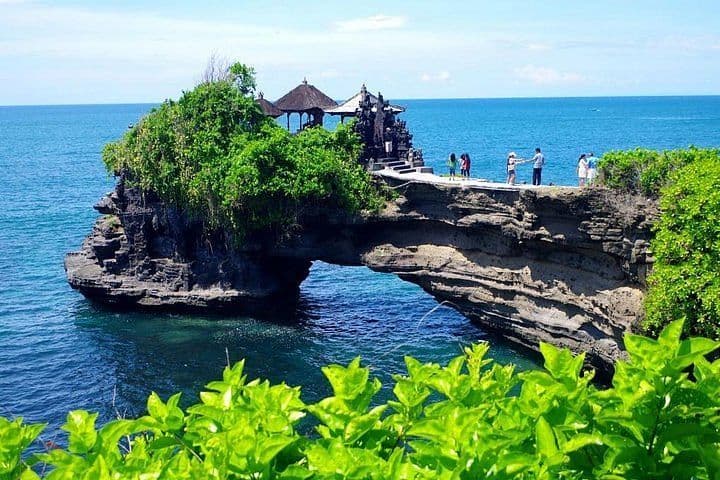
Prime locations where demand structurally grows faster than supply.
Market data per region
Occupancy, return and nightly rate per area
The figures below are broad market averages per region based on market analysis, not specific to our projects. We deliberately focus on the prime locations at the top of this table, where our managed properties typically perform at the top of or above the market range.
| Region | Occupancy | ROI range after costs | ADR range | Profile |
|---|---|---|---|---|
| Uluwatu | 83-90% | 12-18% | $200-400 | Yield and growth |
| Canggu | 75-85% | 9-14% | $150-280 | Yield and liquidity |
| Sanur | 72-80% | 7-10% | $100-180 | Stable cash flow |
| Ubud | 55-70% | 6-9% | $100-200 | Niche and wellness |
| Kedungu | 55-65% | 8-12% | $120-200 | Early stage, growth |
| Candidasa | 45-60% | 4-7% | $80-140 | Quiet, emerging |
Source: market analysis (Airbtics, measured Feb 2025 to Jan 2026). Market median, prime locations perform above average. No return guarantee.
Regions and projects
Which regions are most promising now
- Uluwatu and BinginHighest return and strongest price growth. Nova Ocean Resort is located here, with MĀUA by Swiss-Belhotel as operator.
- Canggu and BerawaMature market with stable returns and very high occupancy.
- UmalasCentral, green and residential, home to our villa projects.
- PererenanEmerging area for the patient investor with a longer horizon.
- UbudWellness and longer stays, a distinctive product.
Why Bali Estate Group
Four reasons why investors choose us
Leasehold up to 80 years
We negotiated extension options up to 80 years, where the market standard is 30 years. At the time of writing unique in the market.
Developer and seller in one
No intermediaries. We select the location ourselves, arrange the legal structure and contract the operator.
MĀUA by Swiss-Belhotel
International hotel operator with decades of experience, on our flagship Nova Ocean Resort. Higher occupancy, lower return variance.
Transparent quarterly reporting
Every quarter, insight into revenue, occupancy and return after tax. Verifiable figures instead of empty promises.
As seen on





Experiences
What our investors say
“We first came across Bali Estate Group through the Lotgenoten podcast, where Roy talked about Bali's property market. He immediately came across as trustworthy, knowledgeable and transparent: he not only highlighted the opportunities, but also spoke honestly about zoning, building materials and possible pitfalls. In our conversation with Pierre, virtually all our questions were answered before we even had to ask them, and there was an instant personal click. The Dutch point of contact and short lines of communication are a big plus, and their involvement does not stop once the sale is done: newsletters with professionally edited videos let you follow the construction closely. We wholeheartedly recommend Bali Estate Group to anyone considering investing in real estate in Bali.”
 Tamara & CoenInvestors
“Bali Estate Group appealed to me right away: the no-nonsense mentality of Roy and Koen, no sales talk, but projects with real character. After an info evening in Delft I bought my first 2 units, with perfect financial guidance through a contact of Roy's. Now 6 units further: tidy and well organised on the construction site, and the after-sales on location is top notch.”
“After I sold my home in the Netherlands, I knew I wanted to do something with my equity. Through Danny I ended up at the Nova Ocean Resort project. I am very happy with my purchase and with the communication from the Bali Estate Group team. I look forward to the future!”
“We have been investing in real estate for several years, looking for a high return combined with a beautiful country to spend our holidays. Originally we wanted to do this in Spain, but due to licensing restrictions there we moved on to other countries. During our search we came into contact with Bali Estate Group. From day one we had pleasant and intensive contact. We had more than a thousand questions and Bali Estate Group always helped us neatly, quickly and professionally.”
“By early 2022 I was already busy putting my money to good use in real estate for a high ROI. However, this job was bigger than I thought. I came into contact with various parties, but it was all 'almost right'. Until I got in touch with Bali Estate Group at the end of 2024. The people gave me good advice and were able to fulfil all my wishes, and recommended investing in Bali with a high return. The person I am in contact with helps me with everything like a true professional investor. I am very satisfied with how everything is going and will certainly keep doing business in the future.”
“The purchase of Nova Oasis Villa in Canggu in early 2025 was initially a bit sluggish, but everything visibly improved along the way. The team is professional and skilled, and the reports are clear and complete. We have now stayed in the villa and will go again this year; it really feels like our second home.”
FAQ
Frequently asked questions
Can I simply buy real estate in Bali as a foreigner?
How long is my leasehold?
What is a realistic return?
How many tourists actually visit Bali?
What are the biggest risks?
How long is a typical investment held?
What about tax in the Netherlands?
What does it cost to take part?
How do I know Bali Estate Group is reliable?
Knowledge base
Dive into the knowledge base
Articles on returns, ownership structure, risk and the most promising regions.
Why Bali is the hotspot for profitable real estate investments in 2026
Tourism growth, scarcity in prime locations and favourable regulation make Bali a serious real estate destination in 2026. These are the current figures and opportunities.
Read articleDemand versus supply: why Bali’s tourism outpaces room supply
The number of tourists in Bali is growing roughly twice as fast as the number of hotel rooms. Why that gap between demand and supply is favourable for investors.
Read articleHow do you maximise a real estate investment in Bali?
From location and operator to maintenance and occupancy: the factors with which you structurally maximise the return on your Bali real estate investment.
Read articleHigh returns in Bali?
What is a realistic return on Bali real estate? We explain what comes off the rental income and show which range is achievable in the island’s best locations.
Read articleWhat makes Bali a safe choice?
Political stability, broadly spread tourism demand and relaxed regulation: discover why Bali is a surprisingly safe destination for your real estate investment.
Read articleWhat PP 28/2025 changes for foreign property owners
PP 28/2025 relaxes the rules around foreign real estate in Bali. What the law means for leasehold, Hak Pakai and your security as an investor.
Read article
The next step
Want to go through in 30 minutes whether investing in Bali fits your situation? Book a no-obligation introductory call.